
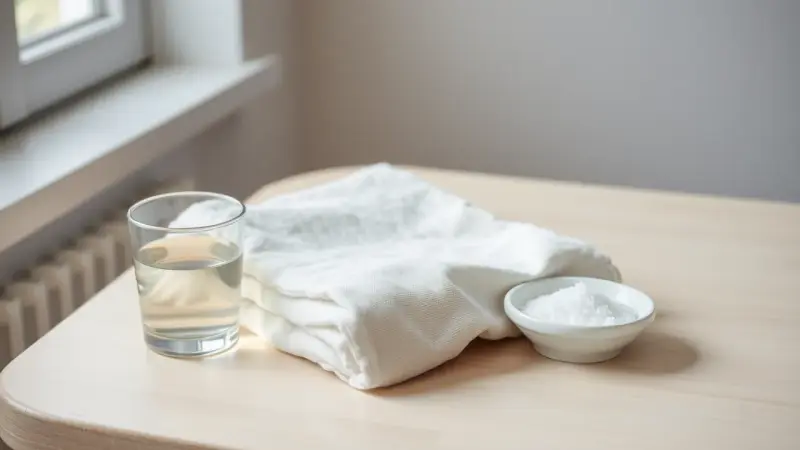
To help a toothache at home, rinse your mouth with warm salt water, hold a cold compress against your cheek, avoid very hot, cold or sugary foods, and take an over-the-counter pain reliever exactly as the label directs. These steps ease discomfort for a while but do not fix the cause, so book a dental visit.
A toothache is pain in or around a tooth, and it usually signals a problem inside the tooth or in the gum around it. Home care is a bridge to treatment, not a replacement for it.
What can you do at home to relieve a toothache?
The most reliable home steps are a warm salt water rinse, a cold compress, an over-the-counter pain reliever and a few changes to how you eat and sleep. Each one calms symptoms without treating the underlying problem.
- Rinse with warm salt water. Stir a little salt into a glass of warm water, swish gently, then spit it out. The rinse can loosen food stuck around the sore tooth and soothe irritated gum tissue.
- Floss gently around the tooth. A piece of trapped food between teeth can cause real pain. Slide the floss carefully; do not snap it down onto the gum.
- Apply a cold compress. Wrap ice or a cold pack in a thin towel and hold it against the outside of your cheek over the sore area. Cold narrows blood vessels and can dull pain and reduce swelling. Never put ice directly on bare skin.
- Take an over-the-counter pain reliever. Follow the package directions, and ask a pharmacist or doctor first if you have other health conditions or take other medicines.
- Keep your head raised. Lying flat sends more blood to your head, which can make throbbing worse. Prop yourself up with an extra pillow at night.
- Choose soft, lukewarm food. Chew on the opposite side and skip very hot, very cold, sugary or crunchy items that set off the pain.
- Try a used peppermint tea bag. Let it cool until it is only slightly warm, then hold it against the sore spot. It will not cure anything, but some people find it soothing.
Can ibuprofen relieve a toothache?
Yes, ibuprofen can relieve toothache pain for many adults. It is an anti-inflammatory medicine, so it may help when swelling in or around the tooth is part of the problem.
It is not right for everyone. People with stomach ulcers, kidney disease, heart conditions, those who take blood thinners and people who are pregnant should check with a doctor or pharmacist before using it. Acetaminophen is another over-the-counter option that works differently. Do not exceed the amount on the label, and do not combine products that contain the same active ingredient.
Do not place aspirin or any other pill directly on the gum or tooth. It can burn the soft tissue in your mouth.
Can a hydrogen peroxide rinse help a toothache?
A hydrogen peroxide rinse can help in some cases, but only when it is properly diluted and spit out. Standard drugstore peroxide is too strong to use straight from the bottle, and you should never swallow it.
The rinse may help clean the area and ease gum irritation. It does not treat a cavity, an infection inside the tooth or a cracked tooth. If you are unsure how to dilute it, ask a dentist or pharmacist rather than guessing.
Do clove oil, garlic and other home remedies work?
Clove oil, garlic and similar remedies may numb or soothe a sore spot briefly, but they are not proven treatments for the cause of a toothache. Treat them as short-term comfort measures at best.
- Clove oil. Clove contains a compound with a numbing effect and has long been used for tooth pain. Use only a tiny amount, dab it on rather than soaking the gum, and keep it away from children. Strong oils can irritate or burn gum tissue.
- Garlic paste. Crushed garlic is sometimes mixed with a pinch of salt and held against the tooth. It may bring mild relief, though it can sting.
- Heat packs and pressure points. Some people try them, but heat on the face can make swelling from an infection feel worse. If your cheek is swollen, stay with cold.
Why does my toothache last so long?
A toothache lasts when the cause is still there. Pain relievers and rinses mask the signal, but they do not remove what is producing it.
Common causes include:
- Tooth decay. A cavity that reaches deeper layers can irritate the nerve inside the tooth.
- A cracked or broken tooth. Pain may flare when you bite down or when the tooth meets hot or cold.
- Gum disease or an infection. Infected gum tissue or an abscess, a pocket of pus at the root, can cause deep, throbbing pain.
- Worn or lost fillings. An exposed area lets temperature and food reach sensitive tissue.
- Wisdom teeth. Teeth that are coming in or are partly covered by gum can ache.
- Teeth grinding. Clenching and grinding can leave teeth and jaw muscles sore.
- Pain from nearby areas. Sinus pressure or an ear problem can feel like a toothache.
Only a dentist can tell which of these is behind your pain, usually with an exam and an X-ray.
When should you see a dentist or go to the emergency room?
See a dentist if a toothache lasts more than a day or two, keeps coming back or keeps you from eating or sleeping. Pain that fades and then stops suddenly can still mean a problem, so a visit is worthwhile either way.
Seek urgent care right away if the toothache comes with any of these signs:
- Fever. It can point to an infection that is spreading.
- Swelling in your face, cheek or jaw. Swelling that is growing or feels hot and tight needs prompt attention.
- A bad taste or pus. A foul taste or a bump on the gum can signal an abscess.
- Pain when you bite down that is severe or getting worse.
- Trouble opening your mouth wide.
Call 911 or go to the nearest emergency room if you have trouble breathing or swallowing, or if facial swelling is spreading toward your eye or neck. Those can be signs of a serious infection. A tooth that has been knocked out or badly broken after an injury also needs urgent dental or emergency care.
Common mistakes to avoid
- Putting aspirin on the gum. Swallow medicine as directed; do not hold it against the tooth.
- Using heat on a swollen face. Cold is the safer choice when swelling is present.
- Ignoring pain that went away. A cavity or infection can persist after the ache fades.
- Waiting for it to pass. Untreated decay and infection tend to get worse, not better.
- Swallowing rinses or oils. Hydrogen peroxide and clove oil are meant for the mouth only, and should be spit out or used sparingly.
FAQ
– What are some home remedies for a severe toothache?
For severe tooth pain, the safest home steps are a cold compress on the cheek, an over-the-counter pain reliever taken as directed, a warm salt water rinse and keeping your head elevated. Severe pain is a reason to call a dentist promptly. If you have fever, facial swelling or trouble breathing or swallowing, seek emergency care.
– How can I stop tooth pain at night?
Raising your head with extra pillows is the simplest way to ease nighttime tooth pain. Rinse with warm salt water before bed, use a cold compress for a short stretch and avoid sugary snacks or very hot and cold drinks late in the evening. If pain wakes you repeatedly, call a dentist the next day.
– What helps a hole in a tooth that hurts?
A hole in a tooth is usually a cavity, and only a dentist can fill or treat it. Until then, rinse gently after eating to clear food from the hole, avoid sweets and extreme temperatures, and use an over-the-counter pain reliever as directed. Do not try to plug the hole with household items.
– Should I worry that a toothache means an infection?
A toothache can be linked to infection, but pain alone does not confirm one. Fever, swelling, a bad taste in your mouth or a pimple-like bump on the gum make infection more likely and call for prompt dental or medical care.