
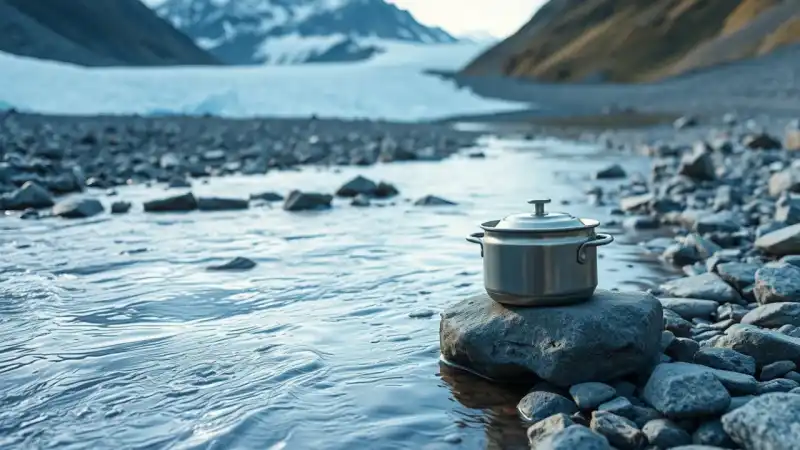
You can drink glacier water only after treating it. Untreated meltwater can carry bacteria, viruses and parasites such as Giardia and Cryptosporidium, plus silt and trace metals. Boiling for at least one minute, or using a filter or purifier made for backcountry use, makes it a reasonable source on the trail.
Plenty of hikers have sipped straight from a glacier stream and felt fine, and the water does look spotless. Clear water is not the same as safe water, because the things that make people sick are too small to see.
Is glacier water safe to drink straight from the source?
Glacier water is not reliably safe to drink untreated. The ice itself may be ancient, but the water you scoop up has usually run over rock, soil and snow where animals and people have been, and it can pick up germs along the way.
Risk depends on where you are. A trickle high on the ice, far from trails, camps and grazing land, is a lower-risk source than a stream near a trailhead, a hut or a busy viewpoint. Low risk is still not zero risk, and you cannot judge it by eye or by taste.
What are the risks of drinking untreated glacier water?
The main risks are microbes, sediment, trace metals and, in some cases, too little mineral content in what you drink. Each one works differently, so each calls for a different fix.
- Germs from animals and people. Giardia and Cryptosporidium are parasites that spread through feces in water. Bacteria and viruses can arrive the same way, from wildlife, livestock or hikers who did not dispose of waste properly.
- Rock flour. Glaciers grind rock into extremely fine powder, and meltwater carries it as a milky or gray cloud. Swallowed in quantity, the suspended particles can irritate the gut, and they clog filters quickly.
- Trace metals. Meltwater can contain small amounts of metals such as lead, arsenic or mercury, whether from weathering rock or from pollution that settled out of the air over the years. Amounts vary widely from one glacier to the next.
- Low mineral content. Pure meltwater has few dissolved minerals. A few sips will not matter, but relying on it alone for your fluids means you are not getting minerals from water, so eat normally.
How do you make glacier water safe to drink?
Boiling, a purifier or chemical or UV treatment will make glacier water safe from germs, and filtering out the silt first makes any of them work better. Choose the method that matches what is actually in the water.
- Let cloudy water settle. If the water looks milky, scoop it into a clean container and leave it until the silt sinks. Then pour off the clearer water from the top, or pass it through a clean cloth to cut the load on your filter.
- Boil it. Bring the water to a rolling boil and keep it there for at least one minute. At high elevations, where water boils at a lower temperature, health agencies advise a longer boil of about three minutes above 6,500 feet. This kills bacteria, viruses and parasites.
- Or use a filter or purifier. A backcountry filter removes bacteria and parasites like Giardia and Cryptosporidium. Viruses are smaller, so look for a product labeled as a purifier, or add chemical or UV treatment, if you are worried about them.
- Let it cool and store it clean. Pour treated water into a container that has not touched untreated water, so you do not recontaminate it.
Neither boiling nor most filters will take out dissolved metals. For a single trip that is a minor concern. If you plan to rely on one glacier-fed source for days, a small risk like this matters more, and carrying water from a tested supply is the safer choice.
| Method | Handles bacteria and parasites | Handles viruses | Removes silt |
|---|---|---|---|
| Rolling boil, 1 minute or more | Yes | Yes | No |
| Backcountry filter | Yes | Not reliably | Partly, and it can clog |
| Purifier or UV treatment | Yes | Yes | No, clear the water first |
| Letting water settle | No | No | Mostly |
What happens if you drink untreated glacier water?
Many people who sip a little will feel nothing, but others get a stomach illness with diarrhea, cramps, nausea or vomiting. Timing depends on the germ. A viral illness can start within about 12 to 48 hours and last up to around three days, while parasites like Giardia can take a week or more to cause symptoms, so a bout of diarrhea after you are home can still trace back to the trip.
For most healthy adults the illness passes on its own. At home, the priority is replacing lost fluids. Sip water or an oral rehydration drink often, rest, and eat bland food once you can keep it down.
When to see a doctor or call 911
Get medical care if diarrhea lasts more than a few days, if you have a high fever, or if there is blood in your stool. Also call a doctor for signs of dehydration, such as very dark urine, dizziness, a dry mouth or very little urination, and sooner for young children, older adults, pregnant women and anyone with a weakened immune system. Call 911 for confusion, fainting, severe belly pain or an inability to keep any fluids down.
Is bottled glacier water the same as drinking from a glacier?
Bottled glacier water is not raw meltwater from the ice. Most products sold with a glacier label come from protected springs, wells or municipal supplies, and they are filtered or treated before bottling. The label points to the origin of the brand, not to a sip straight off the ice.
The same goes for tap water in towns that draw from glacier-fed rivers or reservoirs. Public systems treat and test their water, so that water is a different matter from a stream you dip a bottle into on a hike.
Can you drink glacier water on a hike or trip abroad?
Yes, on any glacier trip you can drink the water once you treat it, and the same rule applies in Alaska, Canada, Iceland, Antarctica and anywhere else. Popular glaciers, including well-visited ones that people walk onto, see a lot of foot traffic and the water downstream of that traffic is only as clean as the people around it.
Before you go, pack a filter or purifier and a way to boil water, and carry more than you expect to need for the first stretch. Treat water at each source rather than assuming the last stream was fine. Rules on drinking water and on glacier access differ by park and country, so check with the local park or land agency.
FAQ
– Has anyone died from drinking glacier water?
Serious illness from glacier water is possible but uncommon for healthy adults, and most cases are stomach illness that clears up with fluids and rest. The people at greater risk of serious trouble are young children, older adults and those with weakened immune systems, mainly through dehydration. Treating the water first removes most of the danger.
– Why is glacier water so clean?
Glacier water looks clean because meltwater from clear ice has little dirt or color in it. Appearance is misleading, since germs, fine silt and dissolved metals can be present without changing how the water looks or tastes.
– Is it safe to drink glacier ice if you melt it?
Melting ice does not make it safe, because freezing does not reliably kill germs. Treat meltwater the same way you would treat stream water, by boiling it or running it through a filter or purifier.
– Can you drink glacier water in Iceland?
You can drink glacier water in Iceland after treating it, just as anywhere else. Water you collect from a glacial stream on a hike should be boiled or purified, while tap water in towns is a separate, treated supply.